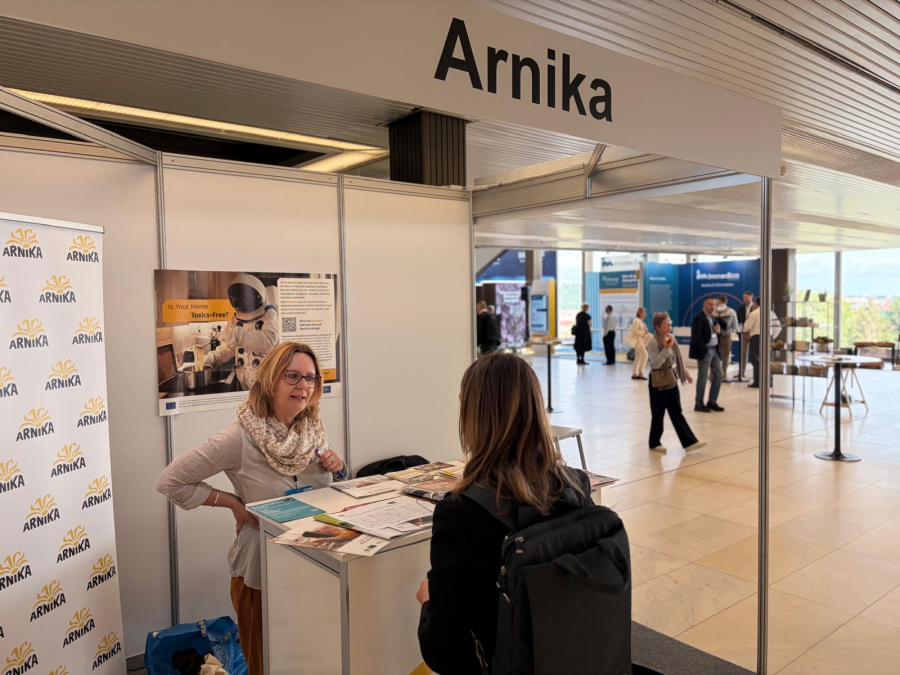
PRAGUE — The 28th European Society of Endocrinology (ECE) Congress, held in Prague this week, brought together over 4,500 delegates and provided a premier platform for Arnika and the LIFE ChemBee project. The project addressed a critical modern health challenge: the impact of Endocrine Disrupting Chemicals (EDCs) on human health and the urgent need for preventive measures to reduce plastic use and harmful substances in cosmetics, cleaning products, and household items.
Amidst a gathering of the world’s leading endocrinologists, pediatricians, and scientists, the project received overwhelmingly positive feedback. Medical professionals emphasised the urgent need to integrate EDC education into the curricula of medical and nursing programs to better prepare future practitioners.
While a healthy diet and exercise are cornerstones of wellness, our "invisible" environment plays a decisive role in long-term health. “With people spending up to 80% of their time indoors, exposure through consumer products and home environment has become a primary concern. With the staggering rise in prostate cancer, the obesity pandemic, and infertility impacting up to 15% of European couples, evidence clearly shows that EDCs play a significant role in today’s most severe health crises,” emphasised Karolina Brabcova, the leading expert on EDCs presence in consumer products.
"The project proves that a new approach toward prevention is gaining support," said dr hab. Aleksandra Rutkowska, founder of DetoxED and creator of the CheckED app, who presented real-world data showing how CheckED app-based exposure profiling can support measurable behavioural changes and reduce proxy indicators of exposure to endocrine-disrupting chemicals. "It is not just about what we eat, but what we surround ourselves with, how we cook, and what we wear. Small, feasible actions matter, " Rutkowska concluded.
A central focus of the project is the protection of vulnerable groups, particularly women of childbearing age and pregnant women. EDCs are known to interfere with hormonal systems, potentially altering the healthy development of a fetus. To combat this, the LIFE ChemBee project showcased the CheckED web app, a digital tool designed to provide patients with actionable guidance on identifying and avoiding harmful chemicals at home.
Arnika and LIFE ChemBee advocate for "low-cost, high-impact" lifestyle changes to limit the "cocktail effect" of chemical exposure including the use of Eco-labeled Certified Cosmetics: or moving away from plastic kitchenware and substituting them with inert materials like glass, ceramics, and porcelain for cooking and food storage.
Building on the momentum of the ECE Congress, LIFE ChemBee invites researchers and healthcare professionals to a focused online Scientific Event on May 20, 2026 (13:00 – 15:00 CET).
The meeting will explore EDCs within the One Health framework, offering researchers valuable insights into:
- Clinical Translation: The feasibility of exposure reduction without costly interventions.
- Exposome Science: Mapping modifiable sources such as indoor environments and food-contact materials.
- Human Biomonitoring: Bridging the gap between app-based exposure profiling and biomarker data.
Registration is open for those looking to collaborate on harmonized metrics and evidence-based prevention mechanisms.

The project LIFE ChemBee (No. LIFE21/GIE/DE/101074245) is funded by the LIFE Programme of the European Union and the Minisrtry of Environment of the Czech Republic. Views and opinions expressed are however those of the project LIFE ChemBee only and do not necessarily reflect those of the European Union, the LIFE Programme or other donors. Neither the European Union nor the granting authority can be held responsible for them.