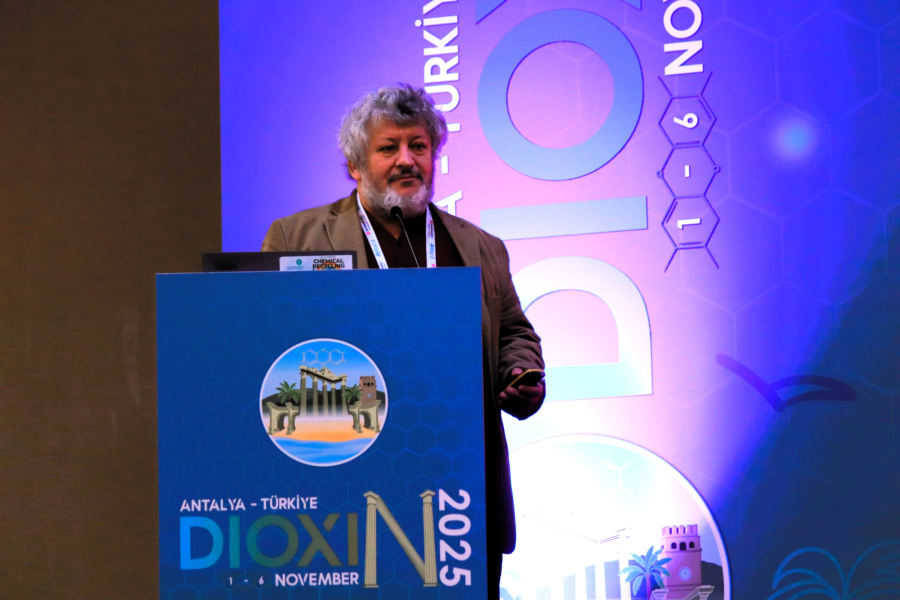
New findings about the so-called “forever chemicals” (per and polyfluoroalkyl substances, PFAS) that do not degrade in nature and accumulate in human and animal bodies, were presented at the international conference Dioxin 2025 held in Antalya, Türkiye. The Czech environmental organization Arnika introduced two research papers thathighlight underestimated sources of global PFAS contamination.
The first study focused on the estimated emissions of PFAS from municipal waste incinerators in the Czech Republic and globally. The results show that incinerators are a significantsource of these persistent chemicals. Global PFAS emissions from these facilities into the air are estimated at 57 to 90 kilograms per year, while a much larger amount, up to 12 tonnes annually, remains in solid residues such as bottom ash and air pollution control residues. These materials are often landfilled or used as construction materials, allowing PFAS to pollute water, soil and the food chain. Despite this, PFAS are not monitored either in air emissions or in waste residues even though such monitoring could be the key to prevent furthercontamination.
"When we talk about tackling PFAS sources, waste incinerators need to be a priority. The continued use of bottom ash in construction materials is particularly troubling – we're literally buildingthese persistent chemicals into our buildings and roads, setting ourselves up for long-term contamination problems." says Nikola Jelínek from Arnika –Toxics and Waste Programme and theleading authors of the first study.
The second study examined the extensive contamination of surface waters with PFAS in Dhaka region, Bangladesh, one of the largest centers of textile production prepared as a joint effort of NGOs ESDO from Bangladesh, Arnika from the Czech Republic and ELAW based in USA. An analysis of 31 surface water samples and 4 drinking water samples from areas near textile factoriesshowed that 87 percent of the surface water samples contained PFAS, often in concentrations far exceeding the limits valid in the European Union, including substances banned by internationalconventions. PFAS were also detected in all tested clothing samples tested in 2022, including those that contained PFOA, a substance banned worldwide.
“Our findings confirm that the textile industry is a major source of PFAS emissions and an important contributor to their spread in the environment,” said Jindřich Petrlík from Arnika’s researchteam, who presented the study at the Dioxin 2025 conference.
Bangladesh produces clothing for dozens of global fashion brands, but local residents pay the price with contaminated water and related potential health problems. PFAS are used mainly intextiles, packaging, water resistant materials and firefighting foams. They have been linked to a wide range of health risks, from hormonal and immune disruption to liver damage and cancer.
According to Arnika, PFAS contribute significantly to the so-called triple planetary crisis, which combines climate change, loss of biodiversity and environmental pollution. Addressing thissituation requires action at the source. It is necessary to limit the use of PFAS where they are not essential and gradually replace them with safer alternatives.
Unlike in many other countries, the Czech Republic already requires polluters to monitor and report PFAS discharges into water. However, Arnika points out that monitoring should also includewaste and incinerator residues, where PFAS accumulate in large quantities. To protect human health and the environment, PFAS must be monitored comprehensively, from production and waste to final products.