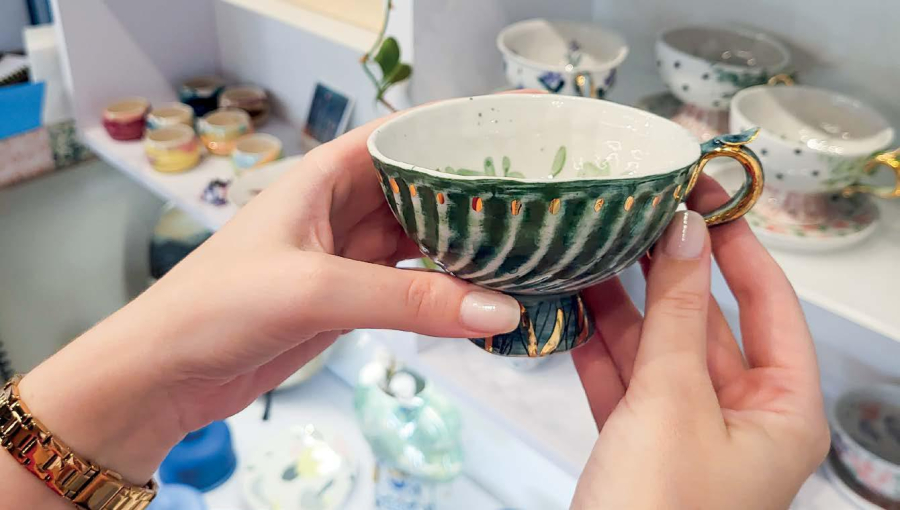
Serbian organisation Safer Chemicals Alternative, together with the Czech organisation Arnika, has published a new report titled “A Heavier Sip”, presenting the results that show the presence of excessive lead and cadmium in ceramic mugs sold on the Serbian market. The findings raise concerns about consumer safety and underline the need for stronger regulatory oversight.
Out of thirty tested mugs, five (17%) did not meet the legal safety requirements for the migration of heavy metals. Two samples released both lead and cadmium, two exceeded the limit for lead alone and one contained higher amounts of cadmium. In several cases, lead levels were dozens of times higher than the permitted threshold. These metals most often originate from pigments used to colour and decorate ceramic products.
The mugs were purchased from a wide range of shops, including general retail stores, homeware shops, bookshops, souvenir stores, Chinese shops, artisan workshops and online sellers, including Instagram-based suppliers. Analyses were carried out by the Institute of Public Health “Dr Milan Jovanović Batut” in August and September 2025 using accredited methods.
“Ceramic mugs have long been recognised as a potential source of lead and cadmium exposure. Manufacturers therefore adapt technologies, apply protective glazes and avoid pigments containing toxic metals, not only to meet safety requirements but also to maintain consumer trust. Unfortunately, products that fail to comply with the law can still be found on the market, which is worrying given the high toxicity of lead and cadmium,” says Gordana Vraštanović Pavićević, specialist in sanitary chemistry and one of the report’s authors.
The findings call for an immediate response from the authorities. ALHem, supported by twelve civil society organisations, has submitted an initiative to the sanitary inspection of the Ministry of Health, urging the withdrawal of unsafe mugs from the market, a consumer recall and the inclusion of information on withdrawn products in the NEPRO rapid alert system so that citizens can be properly informed. Lead and cadmium are among the ten chemicals of greatest public health concern identified by the World Health Organization, which underlines the need for swift action when excessive levels are detected in everyday consumer products.
Food contact materials in Serbia are regulated by the Law on General-Use Articles and the Rulebook on Health Safety Requirements for General-Use Articles Placed on the Market. The section of the Rulebook that covers food packaging and tableware, however, has not been updated since 1989, despite significant scientific and technological developments.
“There is an urgent need to adopt a new Rulebook on Food Contact Materials, which is why we have formally requested its accelerated approval by the Ministry of Health. The regulation should be aligned with EU legislation, grounded in scientific principles and consistent with European and Serbian standards to protect public health and the environment. Without modern rules, regular updates and effective inspection, we will continue to face outdated limits, inconsistent testing and unregulated materials, which ultimately means insufficient product safety,” says Jasminka Randjelovic, Programme Manager at ALHem and co-author of the report.
A particular challenge is the surge in online sales, especially purchases through platforms that operate without local importers and deliver products directly to individuals. Sales through social media accounts, often on Instagram, further complicate oversight. These channels frequently bypass mandatory safety controls and have become a significant pathway for unsafe products, not only in Serbia but also in many other countries, including EU Member States.
“It is alarming that ceramic cups that release heavy metals into beverages can still be found on the market. Consumers must be able to trust that the products they buy are safe. Ensuring this requires strong regulatory oversight, consistent enforcement and harmonised legislation that reflects the highest safety standards,” says Markéta Möller, Arnika’s specialist on toxic substances in consumer products.
Consumers are advised to avoid ceramic mugs decorated with intense colours on the inner surface or on the outer surface up to the rim. They should also stop using mugs that are damaged or show colour changes after repeated washing.
The research was carried out as part of the project “Educating the Young Generation for an Environmentally Responsible Serbia”, supported by the Transition Promotion Programme of the Ministry of Foreign Affairs of the Czech Republic. Alongside ALHem and Arnika, the youth organisations Protecta from Niš and BUM from Bečej contributed to the project and involved young activists in educational activities, sample collection and the submission of the initiative to the authorities.
„A Heavier Sip“ – Report on the Migration of Pb and Cd from Ceramic Cups from the Serbian Market, can be downloaded HERE.