Residents of Písek and Čáslav have rejected two major waste management projects in local votes, even though both had previously received positive decisions under the Environmental Impact Assessment process. According to Arnika, the cases point to serious shortcomings in the practical application of EIA law in the Czech Republic and in the way public concerns are taken into account.
In Písek (around 31 000 inhabitants), residents voted against a planned municipal waste incinerator with an annual capacity of 50,000 tonnes. The CZK 2.1 billion project had been approved for CZK 1.3 billion in support from the Modernisation Fund and had already received a positive EIA decision in 2024. The referendum turnout reached 55%, and a majority of voters rejected the facility. The result is legally binding, and the municipality must now take steps to prevent the incinerator from being built on its territory.
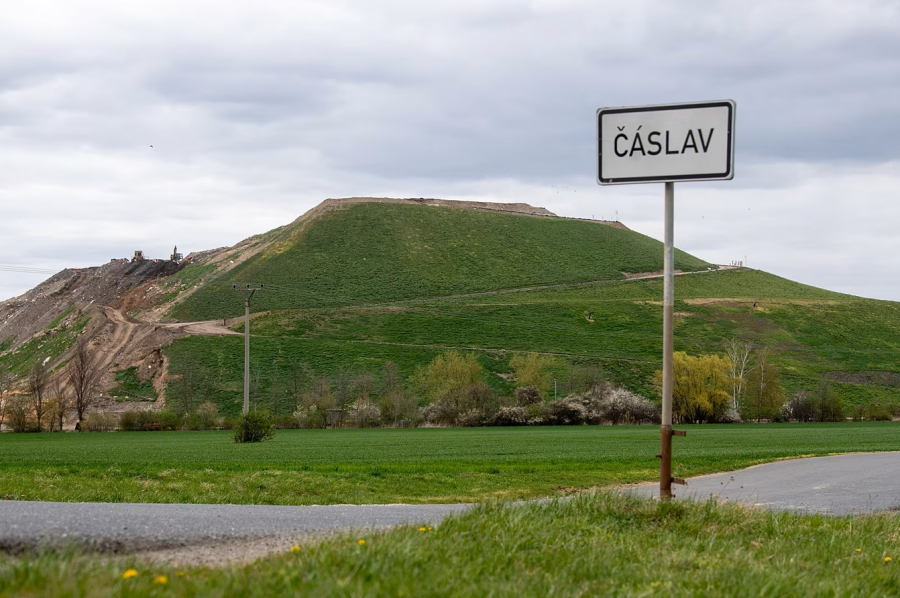
A similar decision was taken in Čáslav (around 10 000 inhabitants), where residents voted on the further expansion of a landfill operated by AVE CZ, o ne of the largest waste management companies in the Czech Republic. With a turnout of 58%, 71% of voters supported the demand that the municipality prevent any further landfill expansion. The municipality is now expected to amend its spatial plan to prohibit waste disposal activities in the affected area.
According to Arnika, both cases show that formal public participation in EIA procedures is not enough. In Písek, residents raised concerns about air pollution, health risks, increased traffic, and the unclear economic viability of the project. These concerns had already been raised during the EIA process, but were not adequately addressed in the final decision.
If comments from municipalities, residents, and experts are only formally addressed but do not genuinely influence decision-making, the EIA process loses its purpose as a tool for preventing environmental harm and protecting public health. Citizens are then forced to resort to extraordinary tools such as local referenda.
“The votes in Písek and Čáslav cannot simply be dismissed as local opposition to inconvenient infrastructure. They are a legitimate response by residents to projects whose impacts on health, the environment, traffic, and quality of life were, in their view, not sufficiently addressed in standard permitting procedures,” Arnika says.
The cases also raise questions about the use of public and European funds for waste infrastructure. Although waste incineration is often described as energy recovery, it ranks below prevention, reuse, and recycling in the EU waste hierarchy. According to analyses by the Czech Ministry of the Environment, approximately half of mixed municipal waste in Czechia still consists of recyclable materials. New incineration capacity may therefore compete with recycling and lock the country into mixed waste generation for decades.
Arnika has therefore contacted the Directorate-General for Environment of the European Commission. In its letter, Arnika warns that the cases of Písek and Čáslav illustrate the gap between formal compliance with European legislation and its actual implementation in practice. According to Arnika, the European Commission should look into whether Czechia ensures genuinely effective public participation in EIA procedures and whether public funds are being used to support infrastructure that may undermine the objectives of the circular economy.