Hamburg and Prague, 25 June 2026. The pan-European LIFE ChemBee project demonstrated that informed citizens can significantly reduce their exposure to hazardous substances through targeted education. However, its findings highlight a critical disconnect: even the most informed citizens face deep information gaps and restricted access to safer alternatives. The project's final report delivers a stark warning that localised consumer vigilance cannot replace the urgent need for systemic, upstream regulatory reform..
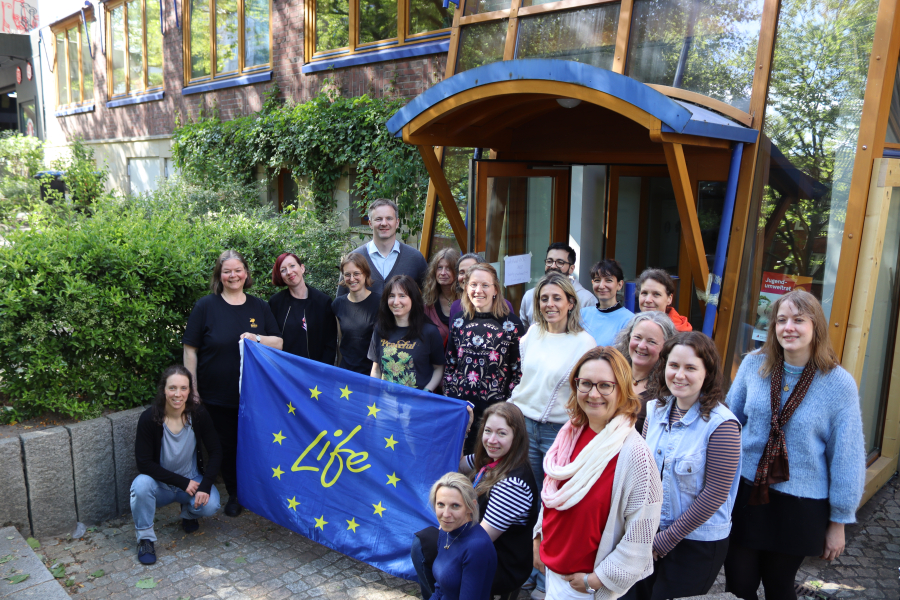
Spanning eight countries, the project reached over 4.4 million EU citizens, registered 25,000 people for safety courses, and trained 3,600 "Chemical Ambassadors" as frontline health educators. The initiative focused on eliminating exposure to Endocrine Disrupting Chemicals (EDCs) and Carcinogenic, Mutagenic, or toxic to Reproduction (CMR) substances commonly found in everyday food packaging, cosmetics, electronics, and toys.
Because Europeans spend 80–90% of their lives indoors, the home and workplace are a primary site of chronic exposure through air, dust, and skin contact. These toxic mixtures are linked to reproductive disorders, metabolic diseases, and hormone-related cancers, with healthcare costs costing the EU an estimated €163 billion annually.
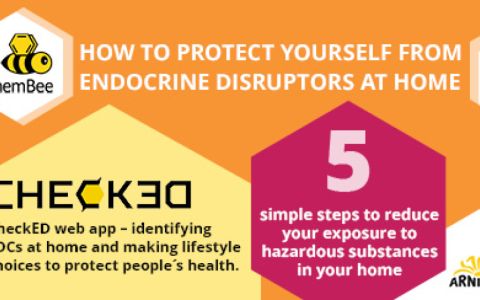
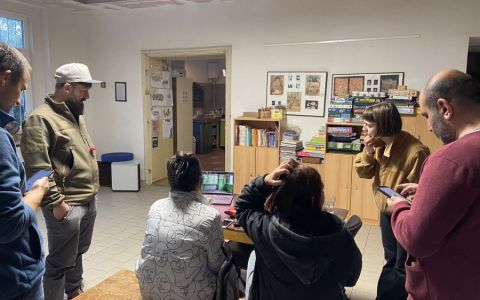
Utilising the project's innovative CheckED web tool, families performed nearly 10,000 household audits to remove high-risk items. The immediate health benefits of these actions are illustrated by a Chemical Ambassador and practicing phytotherapist working with Yeşil Çember in Berlin.
During an audit of a local Turkish-descent family, the Ambassador noted that a daughter suffering from severe respiratory problems was living in an apartment saturated with conventional chemical cleaners. Working collaboratively with the mother, they cleared out the synthetic products and swapped them for verified eco-friendly detergents and natural skincare alternatives. Within a month, the mother reported a significant improvement in her daughter's respiratory symptoms—proving how unrecognised household items directly impact family well-being.
"The challenge is not simply environmental; it is also educational, social, and increasingly medical," says Heidrun Fammler, the managing director of BEF Germany, emphasising that consumers cannot be expected to "carry the burden of protection alone."
Demographic Insights & Vulnerability Gaps
- Socioeconomic Gaps: Men showed higher baseline exposure scores for EDCs due to lifestyle routines, while women emerged as primary household changemakers. Younger participants faced elevated risks from takeaway food packaging, while older cohorts experienced structural exposure from legacy building materials. Strikingly, pregnancy did not automatically trigger lower-exposure behaviours, highlighting that vulnerable groups require proactive institutional guidance rather than assuming awareness occurs naturally.
- Structural Barriers: Shoppers face severe constraints outside their control. Diners cannot avoid chemical leaching if delivery platforms fail to offer non-toxic packaging, and tenants cannot easily replace hazardous materials embedded in shared flooring, furniture, or insulation due to high costs and technical complexity.
A Call for Environmental Justice and Reform
The project reinforces a powerful message of environmental justice: chemical safety must not become a matter of socioeconomic privilege. Placing the entire burden on individual purchasing power inherently neglects low-income families or those with lower chemical literacy.
Drawing on the "One Health" framework—which recognises that human health, environmental safety, and economic stability are deeply interconnected—the project recommends a hierarchy of action where personal mitigation is backed by systemic policy redesign. The LIFE ChemBee partners call for:
- Accelerating Upstream EU Action: Implement the Chemicals Strategy for Sustainability without delay, banning EDCs at the source and implementing class-based restrictions to combat the cumulative "cocktail effect" of chemical mixtures.
- Enforcing Safe-by-Design Defaults: Eradicate the loop of "regrettable substitution" (such as replacing banned PFOA with equally persistent GenX). Hazardous compounds must be substituted at the design stage so that toxic-free products become the default market standard.
- Mandating Complete Supply Chain Transparency: Require producers to provide clear, digitally traceable data on the full chemical inventory of consumer goods to ensure the public's and downstream users right to know.
- Integrating Chemical Safety into Public Health: Incorporate exposure prevention directly into public health strategies, making comprehensive education on Endocrine Disrupting Chemicals (EDCs) and the long-term health effects of toxic exposure a mandatory component of medical, nursing, and educational curricula.
- Excluding Toxins via Green Public Procurement (GPP): Local and regional authorities must use public procurement as a shield, utilising advanced toxicological screening tools to systematically exclude hazardous chemicals from materials entering public schools, kindergartens, and public housing.
"The LIFE ChemBee project proves that while end-users matter, safer systems matter far more," says Susana Fonseca, the author of the final report Do End Users Matter? "The safer choice must become the easiest, most affordable, and structural default for all citizens. A toxic-free living environment is an inherent public right and an investment in a healthier future," Fonseca concludes.

The project LIFE ChemBee (No. LIFE21/GIE/DE/101074245) is funded by the LIFE Programme of the European Union and the Minisrtry of Environment of the Czech Republic. Views and opinions expressed are however those of the project LIFE ChemBee only and do not necessarily reflect those of the European Union, the LIFE Programme or other donors. Neither the European Union nor the granting authority can be held responsible for them.