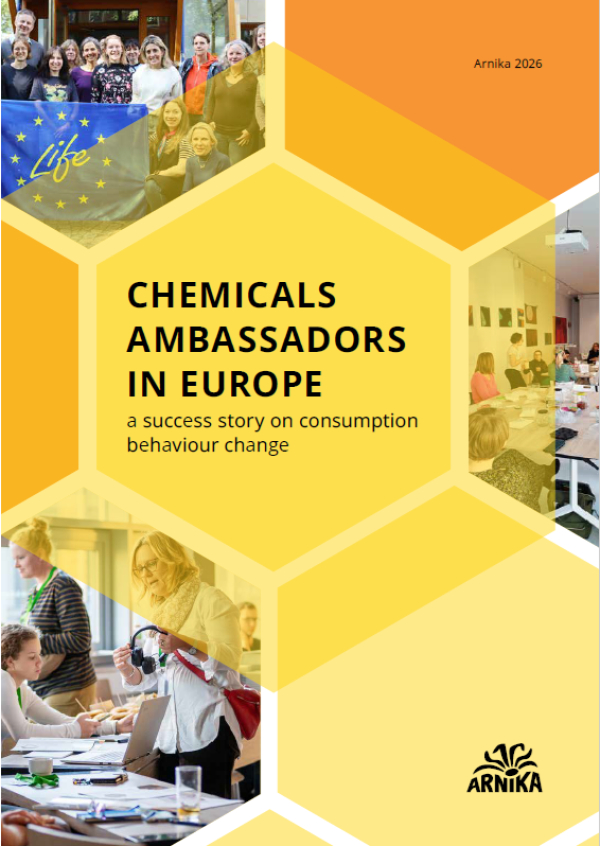
The LIFE ChemBee project served as a pan-European blueprint for behavioral change, demonstrating that reducing exposure to hazardous chemicals – such as Endocrine Disrupting Chemicals (EDCs) and Carcinogenic, Mutagenic, or toxic to Reproduction (CMR) – is most effective when tailored to specific cultural and social contexts. Moving beyond the mere dissemination of facts, organizations from across europe established several regional best practices for community engagement and institutional mobilization.
The project achieved significant scale through a combination of public campaigns, digital tools, and community-based education. Outreach efforts successfully broadcast chemical safety messaging to over 4.4 million EU citizens. Nearly 25,000 individuals registered for specialized courses, and over 3,600 volunteers completed training to become Chemical Ambassadors, serving as frontline educators in their communities. And the CheckED web tool facilitated nearly 10,000 household checks, helping families identify and replace problematic products. Approximately 1,500 users documented long-term behavioral shifts through follow-up assessments.

The project LIFE ChemBee (No. LIFE21/GIE/DE/101074245) is funded by the LIFE Programme of the European Union and the Minisrtry of Environment of the Czech Republic.Views and opinions expressed are however those of the project LIFE ChemBee only and do not necessarily reflect those of the European Union, the LIFE Programme or other donors. Neither the European Union nor the granting authority can be held responsible for them.