On July 18, 2022, it became known that Belarus intended to withdraw from the Aarhus Convention, with the decision taking effect on October 24, 2022. According to the authorities, the decision was allegedly justified by “biased and discriminatory attitudes from the governing bodies of the convention” as well as “instances of pressure on a sovereign state.” The Aarhus Convention is a key international agreement in the environmental sector, aimed at promoting the principles of environmental democracy, justice, transparency, and citizen participation in environmental decision-making. Belarus became a party to it in 1998.
In reality, at the 7th Meeting of the Parties to the Aarhus Convention in October 2021, Decision VII/8c was adopted, which reviewed Belarus’s progress in implementing the recommendations issued to address violations of the Convention’s provisions. Among other issues, the recommendations addressed cases related to the construction of the Neman Hydropower Plant, the Ostrovets Nuclear Power Plant, and the persecution of anti-nuclear activists. Failure to comply would result in the suspension of Belarus’s special rights and privileges under the Convention starting on February 1, 2022. Belarus did not fulfill these recommendations, and the restrictive measures came into effect. In response, the Ministry of Natural Resources and Environmental Protection of Belarus announced its intention to withdraw from the Aarhus Convention.
Changes After the Withdrawal
The consequences of the country’s withdrawal from the Convention include: reputational damage, a diminished international image, loss of access to resources, increasing self-isolation, and the forfeiture of valuable expert potential for improving practices and legislation.
Negative impacts on citizens include: losing access to the protection of their environmental rights at the international level. Human rights defenders and environmental activists have recorded a worsening situation in terms of public access to environmental information, reduced public participation in environmentally significant decision-making, and diminished access to justice on environmental issues.
International cooperation at academic and governmental levels with European countries, which possess valuable and relevant experience in effectively addressing environmental issues, has declined. Instead, Belarus has engaged in joint projects with Russia.
The environmental NGO EcoHome says that according to data from the Legal Transformation Center (Lawtrend), from August 2020 to April 2024, over 100 environmental organisations — ranging from animal protection to educational groups — were dissolved or forced into liquidation. This was followed by website blockages and extremist designations. The largest Belarusian environmental news resource, Green Portal has also been blocked, and its social media accounts have been designated as extremist materials, significantly reducing the public’s ability to safely access information on environmental issues. The Belarusian Green Party was dissolved by the Supreme Court of Belarus, and its former leader is currently imprisoned. There has also been a steady increase in the number of environmental activists becoming political prisoners.
Quote from the NGO EcoHome: "We believe that Belarus will become a free country that works for the benefit of environmental democracy. However, rejoining the convention will require significant efforts", emphasizes EcoHome. "We have prepared a review detailing Belarus’s journey from joining the Aarhus Convention to its withdrawal, including legislative adaptation, practical implementation, as well as the prospects of rejoining the convention and the necessary steps to achieve this".
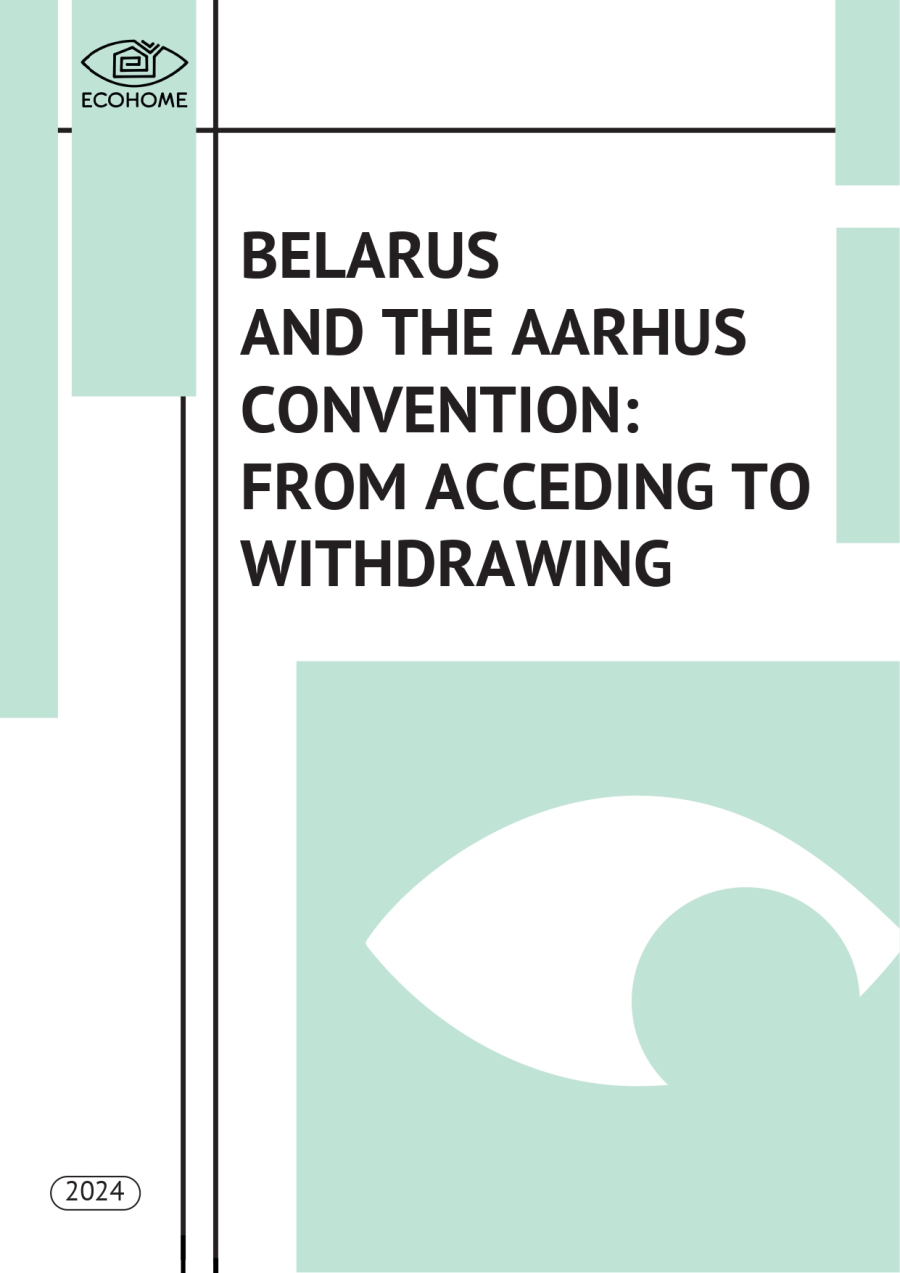
Publication in English: Belarus and the Aarhus Convention: From Acceding to Withdrawing (2024)