Environmental quality is an increasingly important issue for young people in Serbia, ranking just behind personal freedom. At the same time, many of them distrust institutions and doubt their ability to influence public decision-making. Yet public engagement is essential for a country’s development and for building strong international relationships, including with the Czech Republic. We have lived through a similar period ourselves in the late 1980s and early 1990s, which is why we know how crucial support and the sharing of know-how can be at such turning points.
Together with the organization ALHem, founded by experienced experts with a background in leading key Serbian institutions focused on protection against toxic substances, we launched a project in 2025 with the support of the Ministry of Foreign Affairs. The project aims to help young people actively engage in public life. Our focus has been on strengthening consumer protection against toxic substances in consumer products—an area in which we have long-standing expertise. In fact, in this field, our legislation ranks among the most advanced in the world.
We greatly appreciate the Ministry of Foreign Affairs’ support for transformation projects that help partner countries move forward while also strengthening the Czech Republic’s reputation abroad. These efforts contribute to the exceptionally strong relationships our country has built in Serbia and other priority countries.
Learning with a Broader Impact
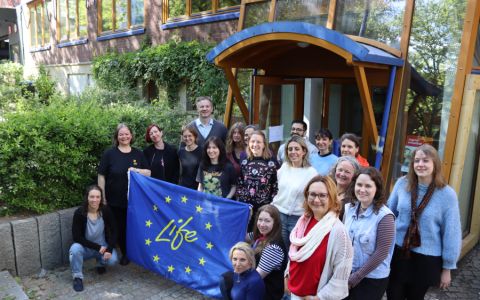
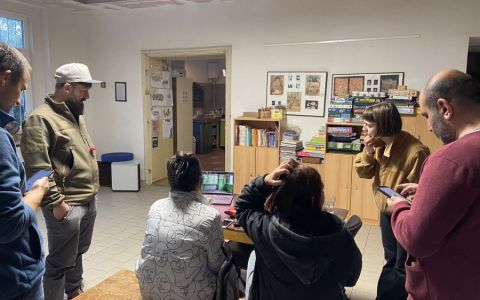
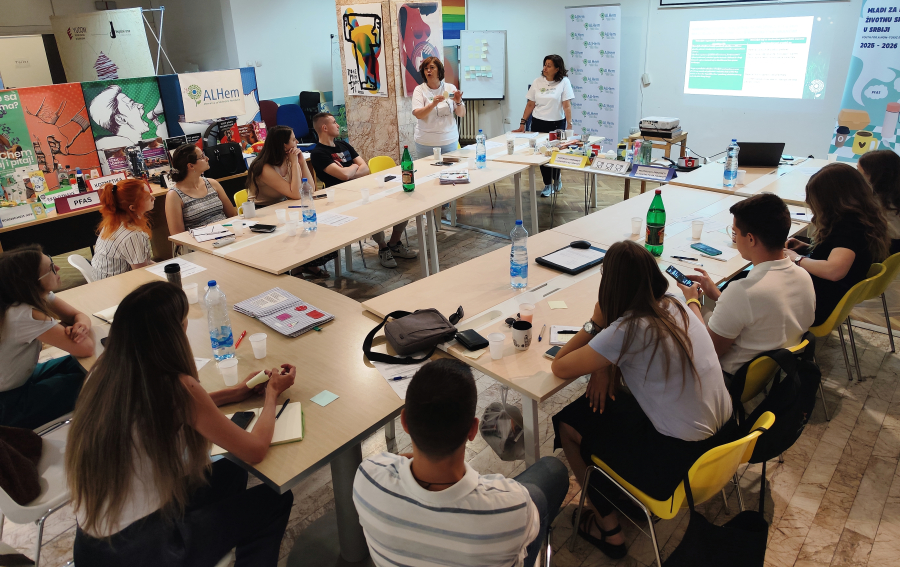
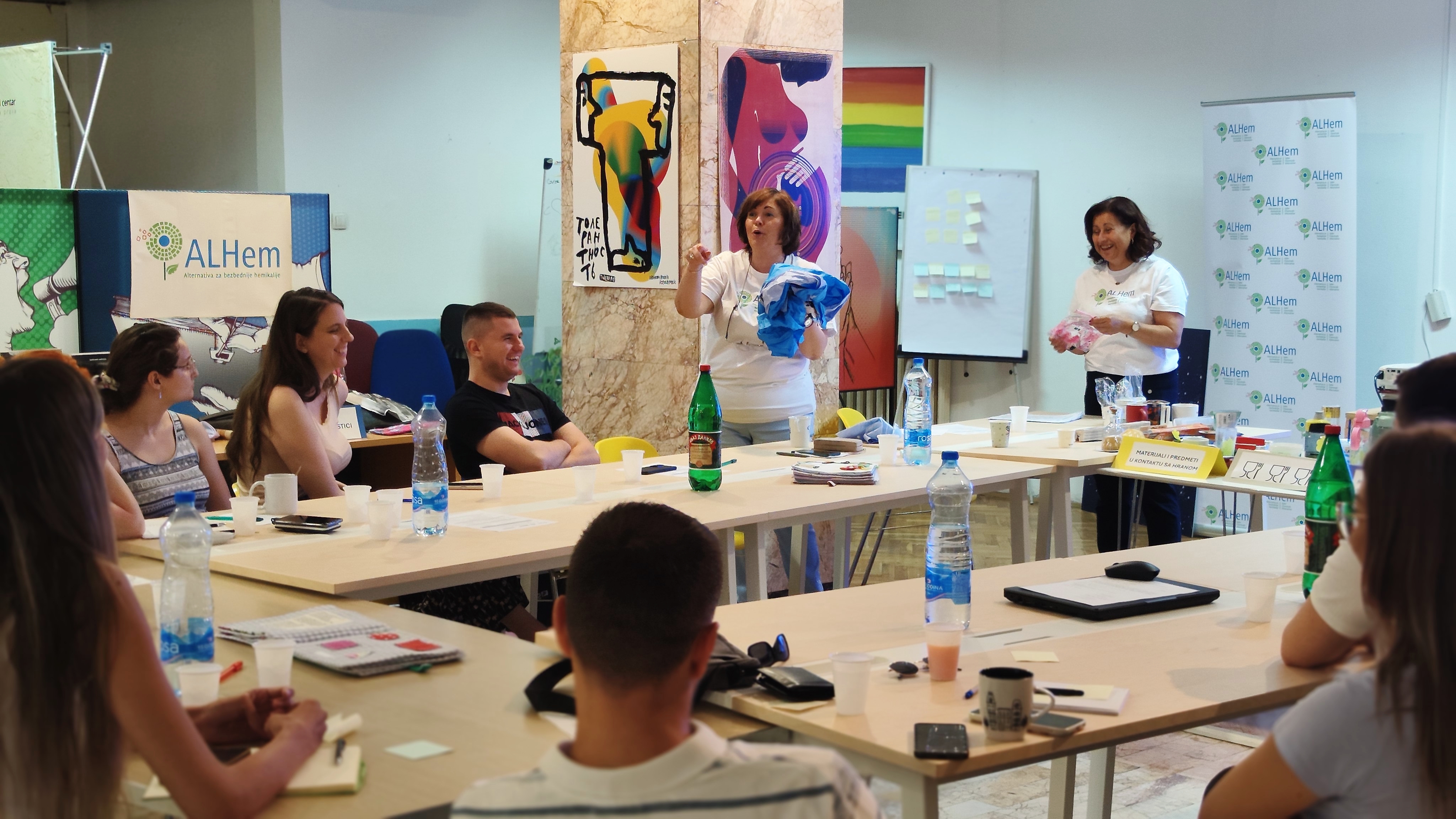
A total of 51 young people from different regions of Serbia applied to take part in our project “Education of the Young Generation for an Environmentally Responsible Serbia”. Over time, an active core group of around 30 participants aged 18–24 emerged. The project is built on a learning-by-doing approach, allowing participants to gain experience through concrete activities and real-life practice, from sampling and data analysis to communicating with institutions, the media, and the wider public.
Throughout 2025, which was the first phase of the two-year project, a series of online and in-person trainings focused on the chemical safety of food contact materials. Participants learned about basic legislation, public health protection principles, and the planning of sample collection and laboratory analyses. Part of the project was also a legislative analysis highlighting differences between Serbian and EU regulations and identifying gaps in consumer protection.
From Data to Public Debate
A key milestone came in the second half of 2025 with the publication of a report summarising the results of laboratory analyses of ceramic mugs for lead and cadmium content from the Serbian market. The report was accompanied by a joint press release from Arnika and ALHem, which received significant media attention across Serbia due to the discovery of mugs with a high content of heavy metals.
Based on the findings, ALHem—supported by 12 civil society organisations—formally called on the Serbian Ministry of Health to carry out extraordinary market inspections, withdraw non-compliant products, and bring national legislation into line with European Union regulations. As a result, the Ministry did in fact conduct the inspections and withdrew the toxic mugs from the market and recalled from customers.
For the young participants, this was a powerful experience: they saw how scientific data can be transformed into public debate and concrete steps towards change.
Looking Ahead
The first year of the Education of the Young Generation for an Environmentally Responsible Serbia project shows that young people want to be part of the solution—when they have space, support, and the right tools. In the second phase of the project, in 2026, we will continue with further activities focused on strengthening young people’s knowledge and practical skills. One of the key topics will be so-called “forever chemicals” (PFAS), which—unlike in Serbia—are already beginning to be gradually restricted in the European Union.