This Plant Occurrence Mapping Methodology was developed and created within the framework of the project: "Natura 2000 in Moldova: Promoting the European Approach to Nature Conservation in Moldova" financed by the Transition Promotion Programme of the Czech Ministry of Foreign Affairs and implemented by the NGOs Arnika and BIOTICA. The pilot plant occurence mapping was carried out for the Emerald Site - Stepa Bugeacului (MD00000016) for the preparation of the Natura 2000 Network in Molodova during 2024 and 2025 by three botanists for the three selected plant species (Crambe tataria, Colchicum fominii, Pontechium maculatum).
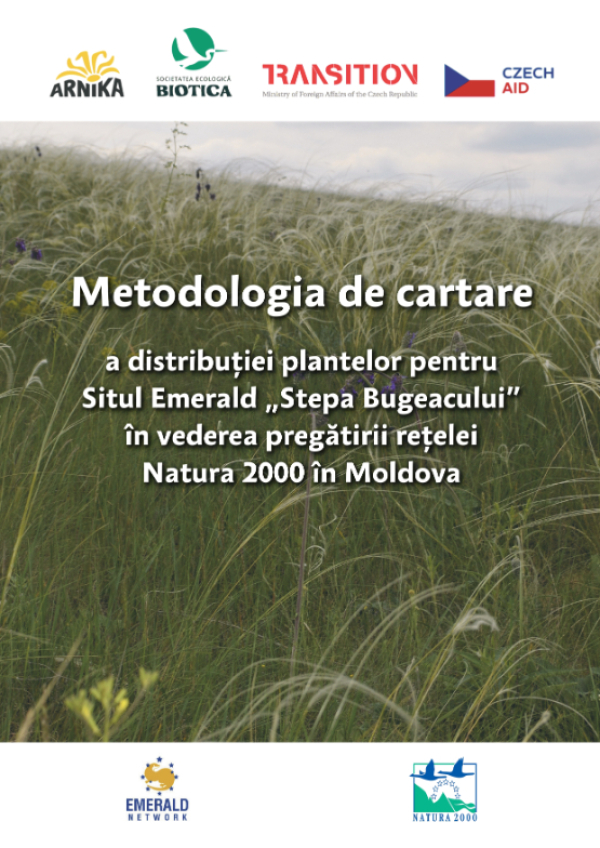
Metodologia de cartografiere a distribuției plantelor pentru Situl Emerald „Stepa Bugeacului” în vederea pregătirii rețelei Natura 2000 în Moldova
Mapping Goals:
To test the recording methodology of plant findings by means of the smartphone application (Mergin Maps) in the field, including data transfer and storage.
To specifically map the Emerald site of Stepa Bugeacului (MD00000016) for the three selected plant species (Crambe tataria, Colchicum fominii, Pontechium maculatum). Evidence of the exact occurrence of the species as well as the “empty” sites which were visited by the botanists carrying out the mapping, but in which the target species did not occur (or were not found) was done within the whole of this Emerald site.
Tools Used:
Mergin Maps mobile application for field data collection and the software QGIS for data processing.
The main aim of this pilot mapping project was to test the methodology and get precise data on the occurrence of all these species – two of them being relevant even now for the current Emerald Network, and all three for the future Natura 2000 Network once Moldova becomes an EU Member State.
The methodology is available for download below (free-of-charge, in the Romanian Language):