In Armenia’s Syunik region, environmental burdens, social problems, and a lack of basic services are intertwined in everyday life. The villages of Gomaran and Geghanush are among the communities most directly affected by mining operations and tailings facilities in the area. As part of the project Ecological Transformation of Mining Areas in Armenia, supported by the Ministry of Foreign Affairs of the Czech Republic, Arnika’s experts, together with partners EcoLur and CCMS, visited these communities in the summer of 2025. The aim was to help local residents understand the real extent of pollution, strengthen their ability to negotiate with public authorities, and look for ways towards safer and more sustainable development.
Gomaran: Ageing village between forests and mining waste
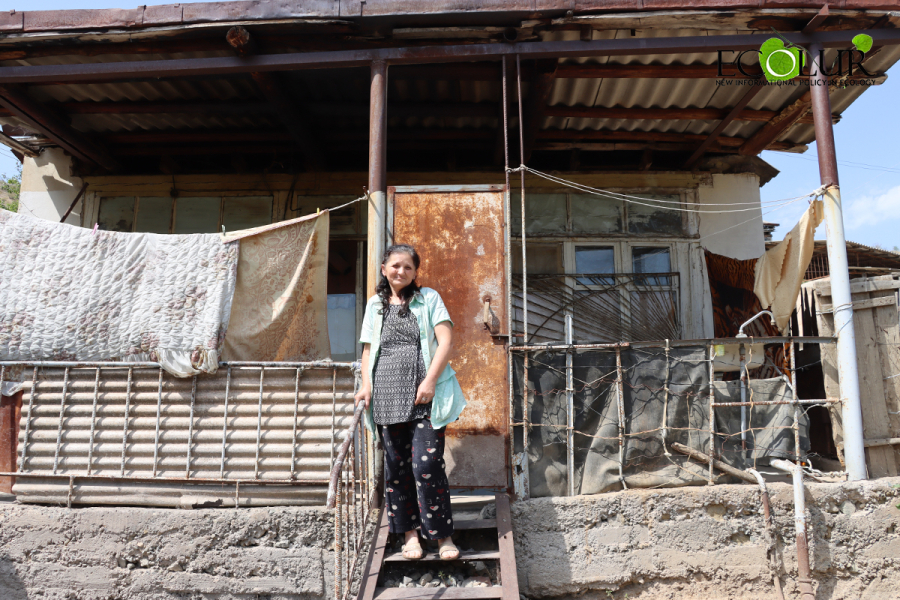
Just two kilometres from the town of Kapan lies the small village of Gomaran with approximately 70 inhabitants. Most of them are seniors – younger people are leaving due to a lack of jobs and basic services. Traditional agriculture is weakening: there is not enough water for irrigation, and after the 2020 war most of the pastures have become inaccessible to residents.
Above the village lies the Geghanush tailings pond, where Kapan Ore Processing Combine deposits mining waste. Residents have long been drawing attention to deteriorating water quality, dust, and related health problems. “We have no health, no water, no harvest, and no work. Young people have left and we are left here alone,” says local resident Ruzanna Khudaryan. Like others in Gomaran, she is calling at least for basic medical care and a solution to the drinking water crisis, as people now have to buy water in shops. Many associate the frequent occurrence of oncological diseases and cardiovascular problems directly with the proximity of the tailings pond and contaminated water sources.
Geghanush: Village on a slope, under which mining waste has been accumulating for 60 years
Geghanush, located six kilometres south of Kapan, is larger than Gomaran – around 300 people live here. There are no job opportunities here either, and most families make a living from small‑scale agriculture and livestock breeding. The village is directly connected to the mining industry: the extensive Geghanush tailings pond has been in operation since 1962 and has been repeatedly expanded. According to the EIA documentation from 2024, it contained more than 7 million m³ of sludge as of the end of March 2023, and the company is now applying to increase the capacity up to 17.4 million m³.
Residents fear that the ever‑higher tailings dam brings serious risks not only for the environment, but also for their health and safety. “When the wind blows, dust and odour come to us from the valley. Trees dry out, fruit spoils. We do not know how the financial assistance from the company responsible for the tailings pond is being used,” explains local resident Zhanna Sargsyan. Community members point out that they receive little transparent information about tailings management, safety measures, or the use of funds that mining companies claim to invest in affected areas.
What Arnika and partners do in the communities
In both villages, Arnika and its partners collected soil samples from household gardens, sediment samples, samples from the surroundings of the tailings ponds, and biological samples (urine) from residents. Following the methodology and experience that Arnika has long applied in the Czech Republic and other countries, the samples will be analysed in accredited laboratories – the National Institute of Public Health, the State Veterinary Institute, and the University of Chemistry and Technology in Prague. The focus is on detecting hazardous substances linked to mining activities, such as heavy metals and other toxic contaminants that may threaten human health and agricultural production.
Experience from Arnika’s work in Armenia in recent years shows that publishing robust data on pollution is crucial for local communities. It helps confirm or refute suspicions of contamination, open dialogue between municipalities and public authorities, strengthen residents’ ability to participate in EIA procedures and other decision‑making processes, and better plan alternative economic activities and sustainable local development. The research results from Geghanush and Gomaran will therefore be publicly presented directly in the communities – just as in other areas of Armenia where Arnika operates with its partners.
Why Syunik mining communities need support
The Syunik region is one of the areas most burdened by metal mining and ore processing in the whole of Armenia. At the same time, it is a territory facing serious social problems, a lack of public services, and high out‑migration, especially among young people. In this context, Arnika and its partners have been striving for three main changes that should improve life in mining communities such as Gomaran, Geghanush, and other affected villages in Syunik and Lori:
- Better availability of transparent data on pollution – without reliable information, local communities cannot effectively protect their health, environment, and basic rights.
- Strengthening civil society and local initiatives – so that municipalities and community groups can negotiate with public authorities and mining companies on an equal footing.
- Support for the ecological transformation of mining regions – with an emphasis on a healthy environment, new economic opportunities beyond mining, and a fair approach to communities.
These goals are also part of a broader two‑year effort described in the project’s final evaluation. According to this assessment, Arnika’s activities have helped, among other things, to strengthen communication between communities and public authorities and to raise awareness of chemical safety and industrial pollution risks in Armenia.
Next steps: Presenting results and supporting local advocacy
Once the laboratory analyses are completed, public presentations of the results will take place in Gomaran and Geghanush. Residents will receive clear recommendations on how to minimise health risks in their daily lives, for example when using local water sources, growing food, or keeping livestock. Partner organisations will continue to support communities in using the new data in negotiations with local authorities, mining companies, and national institutions, and in engaging in EIA procedures and other decision‑making processes that shape the future of mining regions.
Information about the research results and follow‑up activities in Syunik and other Armenian mining regions will be published on Arnika’s website during 2026. The findings are intended not only to help local residents but also to contribute to a wider debate on the environmental and health impacts of mining and tailings management in Armenia and beyond.