In September, Arnika’s team returned from a field mission in Armenia, where they collected one hundred samples from areas affected by mining activities. The goal is to provide local residents with reliable data on how mining impacts their health and the environment.
At the beginning of September, the team embarked on a two-week working trip to Armenia. The first stop was a visit to the Czech Consulate in Yerevan, where they met with diplomats to inform them about Arnika’s ongoing activities in the Syunik and Lori regions. These are areas where Arnika has been active for many years. The discussions focused on specific risks associated with mining that local communities are exposed to, as well as the problematic aspect of foreign capital participation in mining companies. While profits from extraction often flow abroad to investors, the environmental burden and health risks remain with local people.
Over 100 Samples from the Most Contaminated Areas
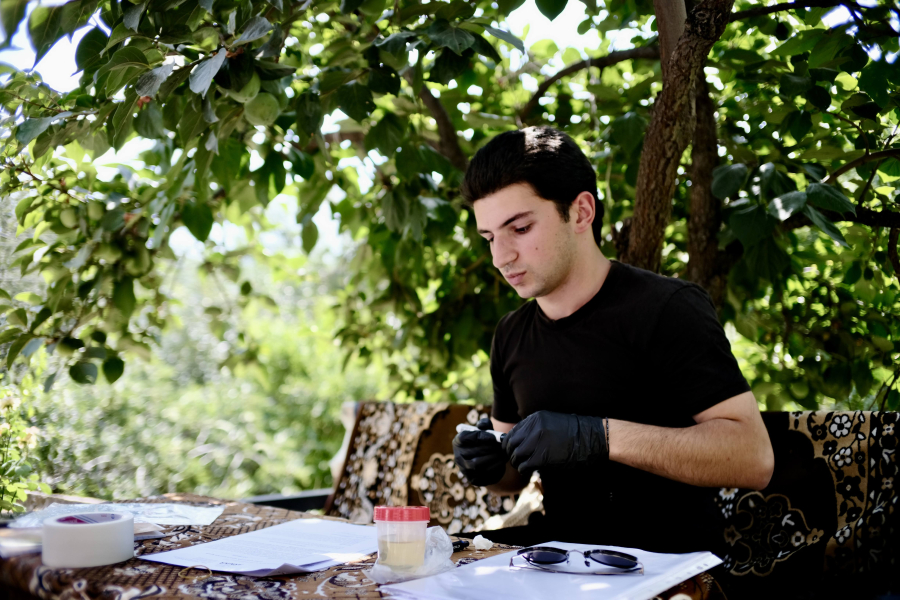
Between September 1 and 13, the team collected a total of 108 samples of soil, dust, sediments, and human urine in areas most polluted by mining operations in the Syunik and Lori regions:
- In the southern Syunik region, sampling took place in the communities of Kajaran, Kapan, Geghanush, and Gomaran.
- In northern Armenia’s Lori region, researchers focused on the village of Arjut, where, in addition to dust, they also collected eggs from household farms located near the local landfill.
“We took samples near vast tailing ponds, whose size is almost unimaginable from a European perspective,” explains Gregory Maliukov, Project Coordinator of Arnika’s Armenian program. “The Artsvanik tailings facility, which receives waste from the Kapan and Kajaran mining complexes operated by ZCMC, is actually the third largest of its kind in the world.”
Local residents have long expressed concerns about mining-related pollution, yet until recently they had little access to reliable data. For several years now, Arnika has been working to fill this information gap. Reactions to our community lectures clearly showed the strong public interest in the results—people want to know what they are being exposed to.
Searching for Heavy Metals
The samples are currently being analyzed by experts from the National Institute of Public Health, the State Veterinary Institute, and the University of Chemistry and Technology in Prague. The analysis focuses on the presence of organic pollutants—such as PCBs, OCPs, brominated flame retardants, PFAS (“forever chemicals”), and UV stabilizers—as well as heavy metals including arsenic, cadmium, lead, chromium, mercury, molybdenum, copper, and nickel.
These substances are known to cause cancer, damage to kidneys, liver, and the nervous system, endocrine and hormonal disorders, immune system impairment, developmental disorders and reduced IQ in children, reproductive problems, and complications during pregnancy.
In urine samples, scientists are tracking levels of arsenic, cadmium, mercury, nickel, and cobalt, which indicate human exposure and potential harm to the liver, respiratory, and cardiovascular systems.
Danger of Doubling Hazardous Substance Levels
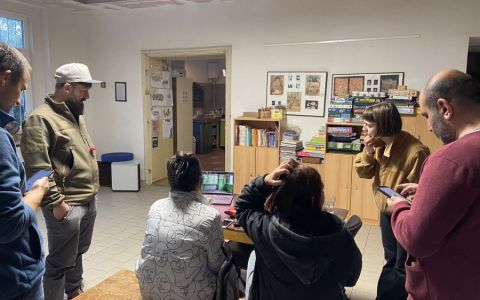
An important part of the mission involved dialogue with residents of affected regions. For example, in Kapan we organized a public lecture about the risks associated with tailing ponds, attended by around twenty local citizens. They received information on when the research results will be available and how they can use the data in discussions with local authorities about the future of mining.
Another key moment was Arnika’s participation in a public meeting of the local council in Pambak on September 11, where the council unfortunately approved new geological exploration in the Karaberd area to assess the possibility of expanding mining operations.
Jindřich Petrlík, Arnika’s toxic substances expert, presented findings from the organization’s 2023 research, which confirmed high concentrations of heavy metals in Karaberd—both in soil and sediment samples as well as in the hair and urine of local residents.
“If a new mine opens, the already detected concentrations of heavy metals could double,” warned Petrlík. “This would violate the local population’s right to live in a healthy environment.”
Results Expected in 2026
The results of this year’s analyses are expected to be available on spring 2026. Arnika plans to present them not only to residents of the affected communities but also to Armenian authorities and international organizations.