Long expected parliamentary elections draw most Moldovans' attention, various state institutions seemed to postpone their decisions and activities to the post-electoral period. Moldovan civil society, however, continued its efforts for a better future and nature protection in the field.
The Moldovan September was a rather heated month, and not only from a meteorological point of view. Crucial parliamentary elections took place on 28th September - they were to set the future geopolitical direction of Moldova for the next 4 years. The pro-EU party PAS (of the currect president Maia Sandu) secured 50% of the vote, far ahead of the pro-Russian Patriotic Electoral Bloc who got under 25% (BBC). It is therefore quite likely the Moldovan Ministry of the Environment will take the first steps to start establishing the Natura 2000 Network, one of the many conditions for its future EU membership. We also hope the old/new governemnt will dedicate human and financial sources for a more systemic nature protection, as we asked for in an open letter sent to all the contesting political parties prior to the elections.
Many Moldovan environmental NGOs, activists or volunteer rangers spent the end of their summer actively in the field – be it by patrolling precious nature sites, organising excursions, arranging education trails or setting strategic developent plans for municipalities in protected areas.
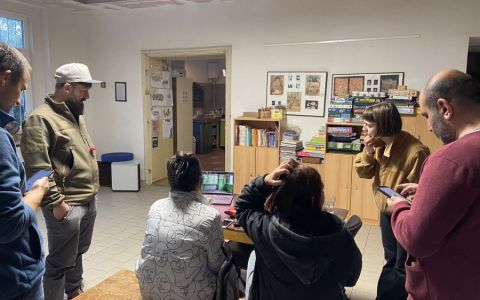
Almost 3 weeks before the elections, when the country´s future orientation was still quite uncertain, we organised a public consultation meeting (round table) in the municipality of Grădinița (Lower Dniester National Park) themed on the development of the new Local Sustainable Development Strategy. The event was opened by the Mayor, Mr. Serghei Ivanov, and was attended by 15 participants – representatives of local authorities, civil society, entrepreneurs, as well as a delegation from the Embassy of the Czech Republic. As a starting point, the expired strategy for the period 2012–2022 was evaluated and the first ideas to be used for the future text were collected. Before we prepare a new draft strategy, we will still organise a consultation with the youth of the community on October 4th, in order to collect further proposals and ideas. The new strategy is to be drafted by November 2025 so that in December 2025 it can be officially approved and, starting from 2026, guide the sustainable development of the Grădinița community.
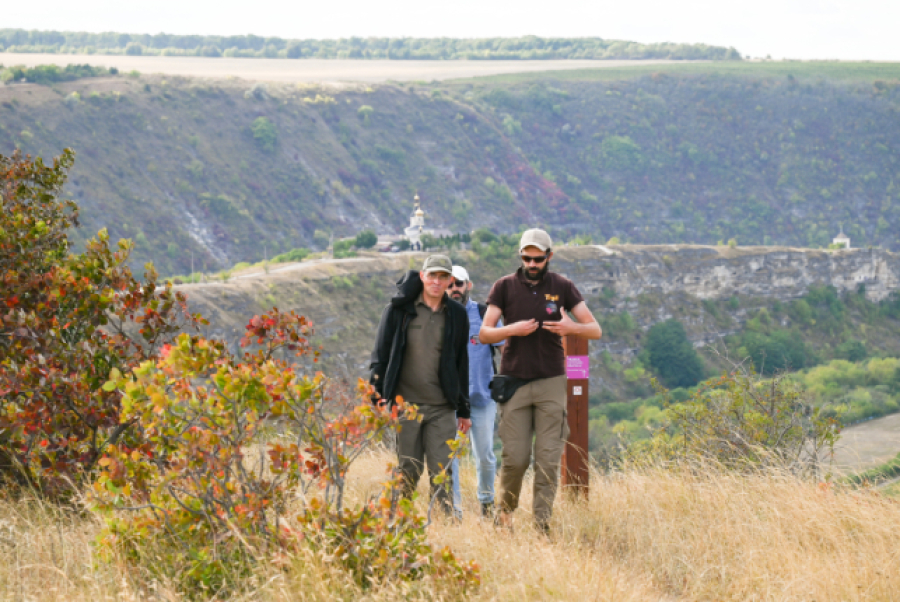
A week prior to the elections, on September 20th, 21 participants (volunteers from the Greenhouse environmental movement, students of the Transnistrian State University, tour guides, other guides and invited guests) from both Dniester river banks took part in an educational excursion entitled: “Protected Natural Areas and their Role in Biodiversity Conservation” organised jointly by Biotica, Arnika and the Transnitrsian environmental organization Pelican. Lectures provided by experts from the Iagorlic scientific nature reserve and the Old Orhei Cultural / Nature Reserve were followed by excursions (including to a new education trail near the Iagorlic administration of the reserve) that demonstrated the interconnection between ecology, culture, and historical heritage. Valeriu Istrati, one of the volonteer rangers and a developer and organizer of visitor trails in natural and cultural landscapes, explained and showed people in the field how to design ecotourism trails and what conditions need to be considered in their planning and arrangement. At the end of the day, a proposal was developed for regular joint activities involving students and volunteers within the reserves.
All these activities were carried out as part of a joint project by Arnika and Biotica “Natura 2000 in Moldova: Promoting the European Approach to Nature Conservation in Moldova”, which is supported by the Transition Promotion Programme of the Ministry of Foreign Affairs of the Czech Republic.