Arnika and its local partner Ecological Society BIOTICA are presenting a six- year overview of environmental work carried out on the left bank of the Dniester River. From 2020 to 2025 the activities focused on the protection of watercourses, restoration of degraded localities and education of communities in an area that often receives limited attention and investment. The outcome includes hundreds of newly planted trees, improved natural springs, the first visitor facilities in the Iagorlic Nature Reserve and a growing group of active volunteers.
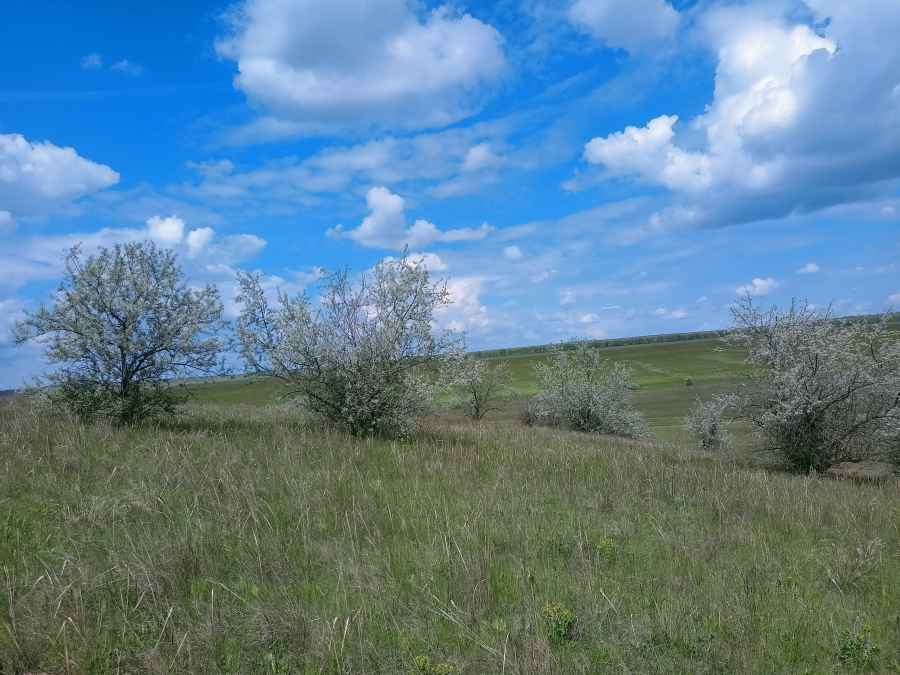
The restoration of small rivers became one of the central areas of work. Along the Sukhaya Rybnitsa River near the villages of Shmalena and Pykalovo, more than two hundred trees were planted to create protective vegetation belts that help stabilise the banks and retain water in the surrounding landscape. Additional plantings took place in the water protection zone of the village of Goyany and in several districts around the Iagorlic Reserve. Across all locations more than six hundred trees of various species were planted. In the reserve itself, an estimated several thousand acorns of downy oak and common oak were sown in order to support the natural regeneration of valuable oak habitats that are typical for this region.
“Across Central and Eastern Europe we are seeing increasing pressure on water resources and rapid degradation of small rivers. Even these seemingly minor interventions matter right now because long term climate trends show clearer signs of warming and instability, which hit smaller and more vulnerable communities the hardest,” says Pavel Pinkava, environmental specialist at Arnika.
With the support of local volunteers, Arnika helped create the first simple but functional visitor facilities in the Iagorlic Reserve. A short ecological path of about four hundred metres was prepared, a small resting place and a gazebo were installed, and a modest sanitary point was built. The area was cleaned, and several visitor spots were arranged so that the reserve gradually becomes more accessible to local residents and visitors in a responsible way.
Community education has been a constant part of the activities. Local residents took part in ecological excursions where they learned about the importance of water protection zones, the work of volunteer environmental inspectors and the principles of protected areas. Joint training sessions organised by Arnika, Biotica and Transnistrian colleagues in 2022-25 involved almost two hundred participants from different parts of the region, including groups of students and environmental NGOs from Tiraspol, Transnistria's capital, and many of them now help with regular monitoring and public events. Communication with the public is also supported by the official Facebook page of the Iagorlic Reserve which offers regular posts, photos and updates on nature and volunteer work.
Another part of the long-term effort was the identification and rehabilitation of natural water sources. Springs in the Grigoriopol district and in the Iagorlic Reserve were cleaned, secured and made accessible again. These small interventions have an immediate effect on local water quality and help preserve cultural landscape features that are important for communities.
“Environmental work in the region has shown that focused community engagement and small-scale landscape interventions can deliver measurable improvements even in areas that face long-term environmental pressures.” says Nicolai Romanovich, who works for the Iagorlic Reserve administration.
Environmental topics connected to the left bank of the Dniester gradually gained more media attention. Reports from planting events and restoration activities appeared on the TSV television channel and in other local news sources. Several videos produced by Arnika and local partners reached significant viewership and helped draw public interest to environmental issues in a region that is often discussed mainly in a political context.
Arnika plans to continue its cooperation with local initiatives so that the experience from recent years leads to further improvements in the protection of water resources, landscape restoration and community involvement.